Giving has always been part of human connection. Whether it is supporting a local cause, appreciating a performer or contributing to a community project, people want simple ways to help. But as fewer people carry cash, the collection box and the cash-only ask are quietly becoming less effective, even when goodwill has not changed at all.
Contactless donations offer a modern answer. Today, people in Canada and around the world can donate using nothing more than their phone or a contactless card. This guide explains how contactless donations work for donors, what charities and nonprofits need to set them up well, and how to avoid the mistakes that leave a donation device sitting unused.
Key takeaways
- Contactless donations let a supporter give by tapping a phone or contactless card, with no cash, no app download and no account.
- Cash is now a small share of everyday payments in Canada, at 11% of transaction volume in 2024, so cash-only collection misses a growing share of willing donors.
- NFC cards and stickers are harder to tamper with than printed QR codes and work in poor light or crowded spaces.
- Fixed locations and events need different setups; decide which one you are solving for before choosing hardware.
- A tap does not collect the donor details the CRA requires on an official receipt, so plan a simple follow-up for donors who want one.
A new way to give in a cashless world
A charity’s collection box, donation table or in-person ask has always depended on one condition: the donor happening to have cash at that exact moment. That condition is becoming less reliable every year. Payments Canada’s Canadian Payment Methods and Trends report found that cash made up just 11% of payment transactions in 2024, while contactless payments accounted for 58%.
The result is a pool of supporters who would give, and want to give, but reach into an empty pocket. Contactless donations remove that barrier. The act of giving feels natural, quick and accessible to anyone with a mobile wallet or a tap-enabled card.
How contactless donations work
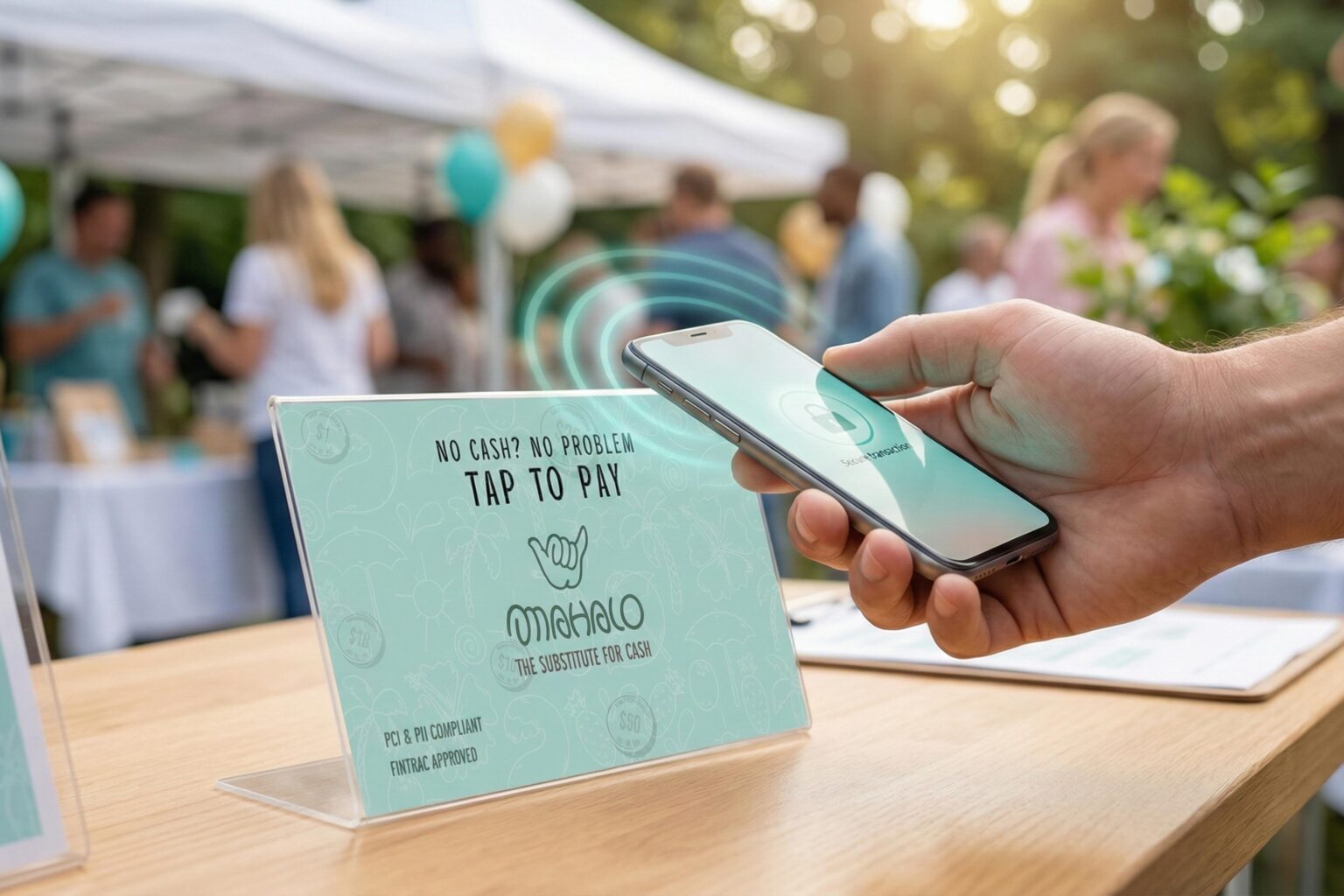
With Mahalo, a FINTRAC-approved cashless payment platform, the process is simple:
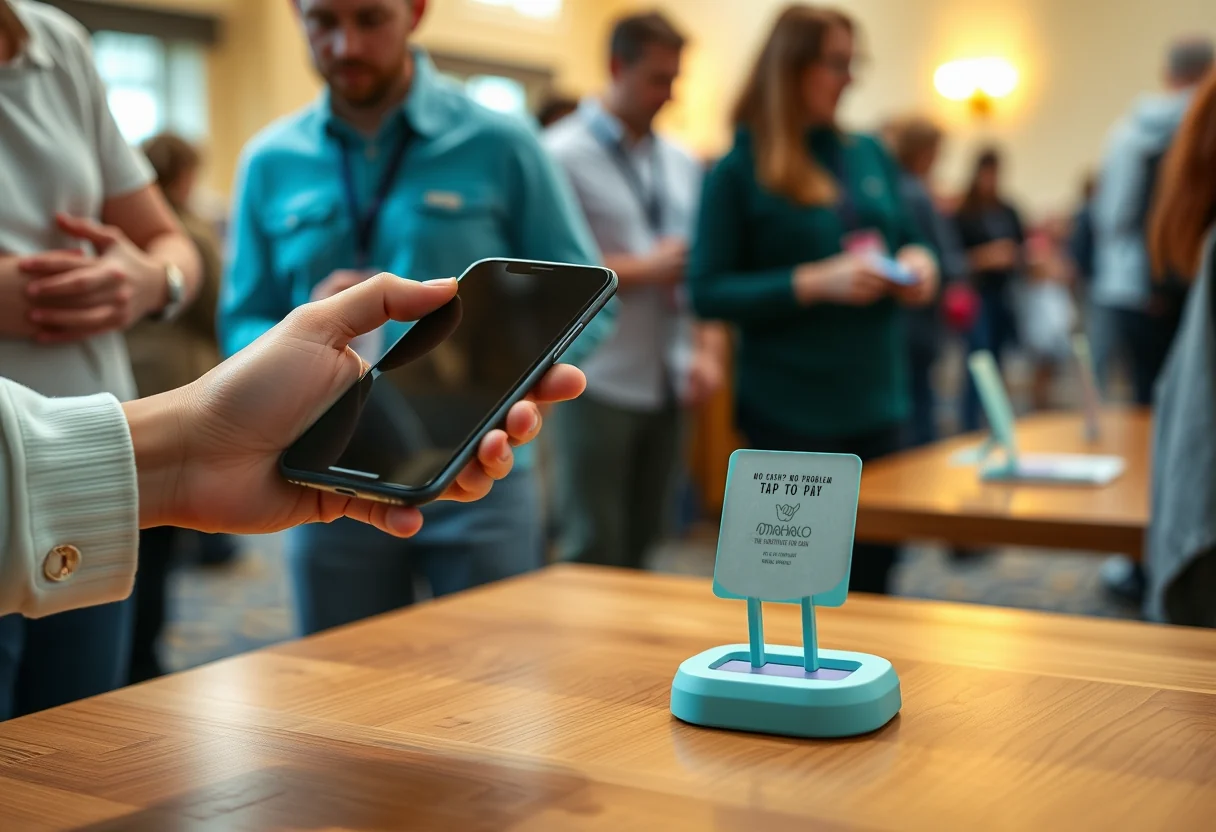
- Tap. The donor taps their phone on a Mahalo Card or Sticker.
- Choose. Their phone opens a secure page where they choose an amount.
- Confirm. They confirm the payment through Apple Pay or Google Pay.
There is no app to download, no account to create and no friction in the experience. The whole exchange takes about as long as buying a coffee, which is exactly why contactless giving has become popular at events, charity drives, worship gatherings and public spaces. People can contribute in seconds, even if they were not planning to.
Why more people are choosing contactless giving
The rise of mobile payments has created new expectations. Donors expect giving to be as fast, safe and convenient as paying for anything else. Contactless giving meets those expectations:
- It works anywhere people gather.
- It requires no technical setup for the donor.
- It removes the need for cash or exact change.
- It creates more opportunities for spontaneous contributions.
Because the donor only needs their phone, participation increases naturally. A moment of generosity no longer relies on whether someone has a wallet with them. Removing that friction also changes the psychology of the moment: when a gift takes three seconds and needs no counting, fewer people talk themselves out of it. That dynamic is explored further in the psychology of giving in a cashless world.
Why NFC inspires more trust than QR codes
Many organizations still rely on printed QR codes, but QR codes can be tampered with or covered by a fraudulent sticker that sends donors somewhere else. NFC technology offers a higher level of safety. Mahalo Cards and Stickers are encoded and secure, making them difficult for anyone to alter.
NFC also works in environments where QR codes struggle. Poor lighting, crowded spaces or damaged surfaces do not affect NFC performance, and the donor does not need to open a camera app and line up a code. They simply tap and complete the action. Trust is essential when asking for support, and a payment method donors already use every day provides it. For a deeper comparison, see why NFC payments are safer than QR codes for public use.
Terminals, cards and stickers: choosing a setup
Not every nonprofit needs the same contactless donations setup, and mixing up the two main scenarios leads to disappointing results.
| Fixed location | Events and fundraisers | |
|---|---|---|
| Typical places | Gallery or museum entrance, storefront counter, reception desk, place of worship | Festivals, golf tournaments, galas, street fundraising |
| Power and lighting | Stable and predictable | Often none; must run away from outlets |
| What matters most | Visibility and placement in the natural path of visitors | Portability, durability and setup in minutes |
| Foot traffic | Steady, repeat visitors | Short, intense bursts |
| Good fit | A well-placed card or sticker at the point of interaction | Cards or stickers volunteers can carry or place on tables |
Whichever you choose, a few baseline requirements apply. The donation should complete in seconds, the donor should never need to download an app first, the setup should work away from a fixed power source for events, and the organization should see donation totals without a manual count at the end of every shift.
Canadian organizations already use contactless donations across very different contexts, from animal welfare fundraising with Friendly Paws Society to large-scale event fundraising at the TMX Charity Golf Tournament and cultural community events like the Lapu-Lapu Festival.
Fees, reporting and tax receipts
Fees. Every contactless donation provider takes some form of transaction fee. The questions worth asking directly are how the fee is structured and disclosed: does it come out of the donation itself, can donors choose to cover it, and is the stated rate the full cost or are there extra charges on top? Vague answers are a warning sign, however polished the product looks. Mahalo states its fee clearly for exactly this reason.
Reporting. Collecting donations is only half the job. A good setup gives the organization automatic digital records, ideally broken down by event, campaign or time period, and keeps donation revenue clearly separate from operational funds. Without that, a staff member or volunteer ends up reconstructing numbers by hand.
Tax receipts. Registered charities in Canada need to plan this part in advance. The Canada Revenue Agency sets out what must appear on an official donation receipt, including the donor’s full name and address. A quick tap does not capture those details. The practical approach is to treat contactless donations as the fast channel for spontaneous gifts, and give donors who want a receipt a simple follow-up step, such as a short online form or a sign-up at the table.
Common mistakes with contactless donations
A few recurring mistakes separate organizations that get real value from contactless donations from those that do not.
- Poor placement. A card or device behind a table, rather than at the point of interaction, gets used far less.
- Silent volunteers. Assuming donors will notice a small card on their own. Volunteers only need to add one line to their usual ask, inviting people to tap their card or phone to give right now.
- Treating the tech as the pitch. Contactless giving works best as a natural extension of a charity’s existing message, not a gadget that needs its own explanation.
- Judging too early. Treating the first event as a permanent verdict instead of one data point. Test placement, brief volunteers and review results before deciding.
- Measuring only the total. Track how many taps happened compared with how many people were asked, and average gift size compared with cash events. Low use despite heavy foot traffic points to a placement or prompting problem, not a problem with contactless giving itself.
The lowest-risk way to start is a pilot: one upcoming event or one fixed location, compared against a typical cash-collection baseline. That measured comparison, rather than assumption, should guide how quickly to expand.
Used across Canada and around the world
Contactless donations are not limited to any single region. They work for visitors and locals at public events, tourists supporting street performers, community groups reaching international guests, and charities hosting multicultural gatherings.
Mahalo supports payments from guests in any country, so organizations can welcome global contributions without complex systems, cash handling or currency exchange. That global compatibility helps communities grow their support far beyond what traditional donation methods can reach.
Technology should support generosity, not complicate it. People give more when giving is easy, and more often when the experience feels natural. Whether at a local festival, a street performance, a charity event or a worship gathering, a simple tap can now make a meaningful difference.
Frequently asked questions
How does tap to donate work?
The donor taps their phone or contactless card on an NFC-enabled card, sticker or terminal. With Mahalo, their phone opens a secure page where they choose an amount and confirm through Apple Pay or Google Pay. No app download or account is needed.
What is a cashless donation?
A cashless donation is any gift made without physical cash, for example by tapping a phone or card, paying online or using a mobile wallet. Contactless donations are the in-person version, designed to be as quick as a regular tap-to-pay purchase.
Can I donate to charities using Apple Pay?
Yes, where the charity accepts it. With Mahalo, donors tap a Mahalo Card or Sticker and confirm their gift through Apple Pay or Google Pay, with nothing to install.
Do donors need a Mahalo app?
No. Donors pay using their phone’s mobile wallet without installing anything.
Is the system secure?
Yes. Mahalo is FINTRAC approved and uses encrypted transactions with NFC, which is safer than printed QR codes that can be tampered with.
Can someone from another country donate?
Yes. Anyone with a mobile wallet can contribute, so visitors and international guests can give without Canadian cash.
Do contactless donations work offline?
Yes. With Mahalo, payments are saved and complete automatically once a connection is restored.
Can a charity issue tax receipts for contactless donations?
A registered charity can, but the CRA requires details such as the donor’s full name and address, which a tap alone does not collect. Offer donors who want a receipt a simple follow-up step to provide them.