For decades, the collection box did most of the work at charity events, bake sales and street campaigns. Supporters dropped in coins and bills, and the box filled up. Today many of those same supporters walk up willing to give and find they have nothing in their pockets. Tap to donate is how charities are closing that gap: a supporter taps a card or phone, and the gift is made in seconds.
This guide is written for Canadian charities and nonprofits. It explains how tap to donate works in practice, where it performs best, how official tax receipts fit in, and how to set up a station that people actually use.
Key takeaways
- Tap to donate lets a supporter give with a single tap of a card or phone, which suits donors who no longer carry cash.
- Contactless is now the norm: Payments Canada reports that 58% of Canadian transactions in 2024 were contactless.
- Tap to donate performs best at in-person moments with short attention spans, such as events, counters and street campaigns.
- A tap alone does not collect the donor’s name and address, which the CRA requires on an official donation receipt, so plan how you will handle receipts.
- Clear signage and a visible cause matter as much as the hardware.
Why charities are adding tap to donate
Spontaneous giving has always depended on convenience. When cash was in every pocket, the collection box was convenient. That is no longer true. Payments Canada’s Canadian Payment Methods and Trends report found that 58% of transactions in 2024 were contactless, while cash made up just 11% of payment volume.
For a charity, that shift shows up as a willing supporter who stops at your table, wants to help, and then apologizes for having no change. Tap to donate turns that moment back into a gift. It is not a replacement for online fundraising or monthly giving; it is the in-person tool for the moments when someone decides to give on the spot.
How tap to donate works, step by step
From the supporter’s side, tap to donate takes a few seconds:
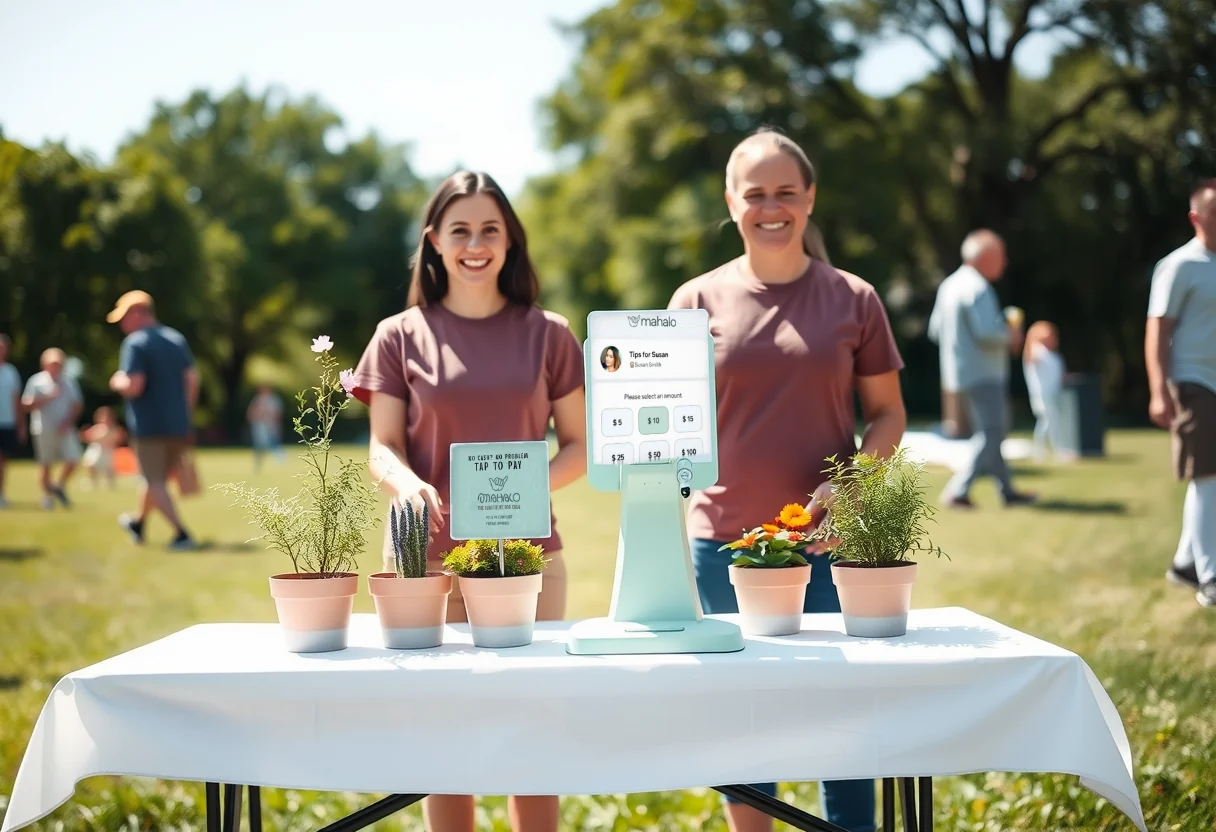
- The supporter sees your cause and a clear “tap to donate” prompt.
- They choose to give and tap a contactless card, phone or smartwatch on the tap device.
- The donation is processed, and the funds go to the organization’s account.
Many tap to donate setups use a preset amount, which keeps the interaction to a single tap. Others let the supporter choose from a few amounts first. Preset amounts are faster; choices can raise the average gift but add a step. If you want the supporter’s view of donating with a phone in more depth, how contactless donations work walks through it.
Where tap to donate works best
Tap to donate performs best wherever a decision to give is quick and in person.
| Setting | Why tap to donate fits | Practical tip |
|---|---|---|
| Fundraising events and galas | Guests are generous but rarely carry cash | Place devices where guests queue or linger |
| Street and door-to-door campaigns | Conversations are short | Use a preset amount to keep it to one tap |
| Counters in cafés, shops and venues | Customers are already tapping to pay | Put the device right beside the checkout |
| Places of worship and community centres | Traditional collection relies on cash | Offer tap alongside, not instead of, existing methods |
| Festivals, markets and sporting events | Fast-moving crowds and small gifts | Make the cause visible from a distance |
Tap to donate compared with other ways to give
| Method | Speed for the donor | Needs cash | Best for |
|---|---|---|---|
| Tap to donate | One tap | No | In-person, spontaneous gifts |
| QR code or donation page | Several steps on a phone | No | Supporters with time to fill in a form |
| Online donation form | Several minutes | No | Larger, planned or receipted gifts |
| Collection box | Quick, if the donor has cash | Yes | Supporters who still carry cash |
Online forms remain the right tool for planned gifts, monthly giving and donors who want a receipt immediately. Tap to donate complements them by capturing the gifts that would otherwise never be made at all. The security differences between tap and codes are covered in why NFC payments are safer than QR codes for public use.
Tax receipts and CRA rules
Receipting is where charities most need to plan ahead with tap to donate. According to the Canada Revenue Agency, an official donation receipt from a registered charity must include, among other things, the charity’s registration number, a unique serial number, the amount of the gift, and the full name and address of the donor.
A tap on its own does not collect a donor’s name and address. That does not stop a charity from accepting tap donations, but it does mean deciding how receipts will be handled:
- Small spontaneous gifts are often accepted without an official receipt, just as coins in a collection box are.
- Donors who want a receipt need a simple way to provide their details, such as a follow-up form or a card with a link.
- Larger or planned gifts are usually better directed to your online donation form, which collects receipt details as part of the process.
Be clear with supporters at the point of giving about whether a receipt is available and how to request one.
Security and donor trust
Tap to donate uses the same NFC contactless technology people use at the checkout every day, which is part of why supporters trust it. The supporter never has to hand over a card, type a card number into an unfamiliar web page, or scan a code that might have been tampered with.
Trust is also about transparency. Show your organization’s name and cause clearly on or near the device, and make sure supporters can see what they are giving to before they tap. The emotional side of cashless giving is explored in the psychology of giving in a cashless world.
How to set up a tap to donate station
A few practical choices make the difference between a device that sits ignored and one that raises money.
- Make the cause the headline. Supporters give to a cause, not to a device. Lead with who you help.
- Choose your amounts deliberately. A single preset amount keeps it to one tap; two or three options can lift the average gift.
- Place it where people pause. Beside a checkout, at the event entrance, or where guests wait.
- Keep the prompt simple. “Tap to donate” is enough.
- Plan receipts in advance. Know how a donor who wants a receipt will get one.
- Say thank you. A visible thank-you message after the tap reinforces the gift.
Mahalo supports this kind of in-person giving with a tap-to-pay approach: the supporter taps a card or phone, with no QR code to scan and no app for the supporter to download. For the broader case for contactless giving, see tap to tip and the future of gratitude.
Measuring whether tap to donate is working
Total dollars raised is the obvious number, but it hides the reasons behind a good or bad result. Charities get a clearer picture by tracking three things at every event where tap to donate is offered.
- Taps compared with asks. Count roughly how many people volunteers spoke to and how many tapped. Low use despite heavy foot traffic usually points to placement or prompting, not to the idea itself.
- Average gift compared with cash. Compare the typical tap donation with the typical cash gift at a similar past event.
- Receipt requests. Track how many donors asked for an official receipt, so you can size the follow-up process for next time.
Treat the first event as a baseline rather than a verdict. Adjust placement, amounts and the volunteer script, then compare the second event with the first before deciding how widely to roll tap to donate out.
Frequently asked questions
How does tap to donate work?
The supporter taps a contactless card, phone or smartwatch on a tap-enabled device, usually for a preset amount, and the donation is processed in seconds. The funds are then paid to the organization. Because it uses the same contactless technology as everyday card payments, supporters do not need cash, an app or a form to give.
How does click to donate work?
“Click to donate” usually means giving through an online donation button or page: the donor clicks, enters their payment and contact details, and completes the gift. It suits planned and receipted gifts, while tap to donate suits quick, in-person moments. The phrase has also been used for websites where a sponsor funds a donation each time a visitor clicks, which is a different model altogether.
Can a charity issue a tax receipt for a tap donation?
Yes, if it is a registered charity and it collects the information the CRA requires, including the donor’s full name and address. A tap alone does not capture those details, so charities typically offer a simple follow-up step for donors who want a receipt.
Is tap to donate safe for donors?
Tap to donate uses the same NFC contactless technology as everyday card payments, so the donor never hands over their card or types card details into an unfamiliar page. As with any donation, supporters should check that the organization and cause are clearly identified before they tap.